







The Most Followed Football Clubs on Social Media
Reading time:
7 min
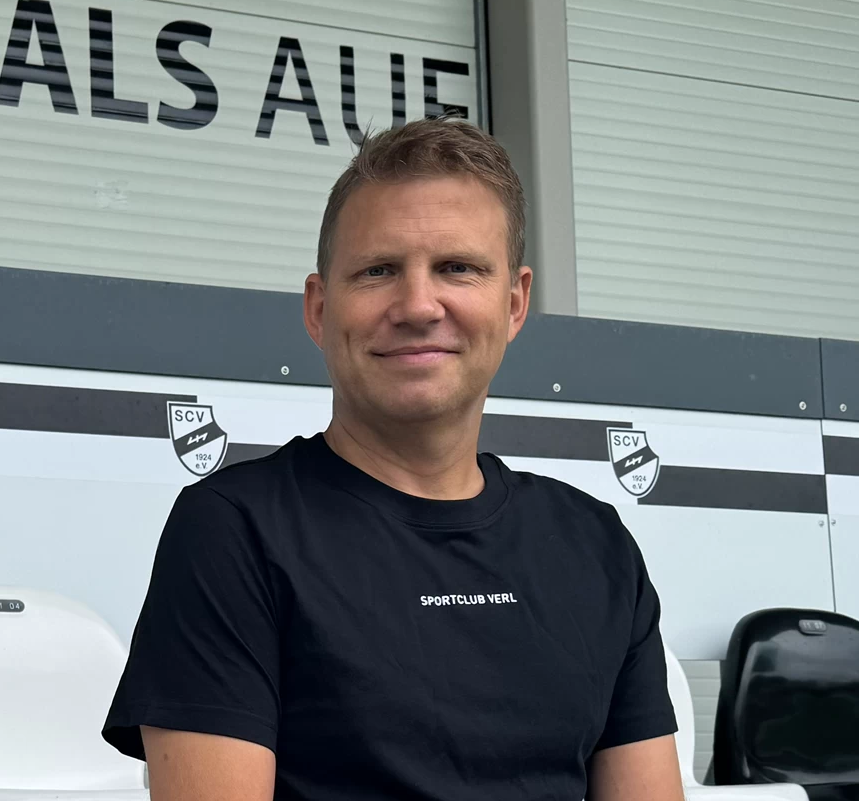

SC Verl is not trying to copy bigger clubs.
In this conversation, Matt Beadle, Technical Director at SC Verl, explains how the club translates its football DNA into clear KPIs, uses data as an additional scouting lens, and builds practical tools without oversized infrastructure.
From possession and pressing to lean partnerships and fan engagement in a town of around 25,000 people, this interview shows how a smaller professional club can create clarity, identity, and momentum on and off the pitch.

For us, it all boils down to two key KPIs.
1. Am I able to keep the ball and
2. When I lose it, how quickly am I able to get it back.
Our DNA is based on us controlling the game. You can only create chances if you have the ball, and the more you have it, the more you can move your opponent around to create space. In other words: the greater the variety of chances you can create. On the flipside, winning the ball back as high up the pitch as possible makes the route to the opponent's goal all the shorter and our task easier. So Possession stats and PPDA (pressing stats) are the beginning of all our scouting and coaching decisions.
I think there is a slight misunderstanding in some circles, that data-driven scouting is replacing traditional eyes on the ground. We don't see it like that at all. We see Data as ANOTHER set of eyes in addition to our scouts. We hope to find info in the data that either our scouts have missed or, maybe that they have seen which then supports their opinions. Either way our decision-making is improved. Win-win. We do it on a small budget by keeping most of the strategic and developmental work in-house and by building partnerships with IT companies who are happy to use us as a reference. Again: win-win.
We only have around 25,000 inhabitants in Verl so getting huge crowds will always be difficult. What we did decide, though, is that those who come into the stadium should be entertained. So our focus remains, not only on trying to get a result, but on playing attractive, possession-based football which entertains. During the game we now have Manni the white tiger mascot, who was named after our longest-serving member of staff and our stadium announcer Thorsten hosts a short player talk after the game to keep the fans involved and engaged. We do what we do, for the fans so we are always looking for new ways to entertain them.
This interview is exactly the kind of conversation I enjoy most.
Not because SC Verl has the biggest budget.
Not because they have the largest staff.
Not because they can outspend the market.
But because they seem to have something far more useful for a club of their size:
Clarity.
And in football, clarity is underrated.
A lot of clubs talk about DNA.
It is one of those words that gets used so often that it can become meaningless.
“We have a clear DNA.”
“We know how we want to play.”
“We have our own identity.”
Sounds good.
But the difficult part is not saying it.
The difficult part is operationalising it.
Matt’s answer is refreshing because he brings it down to two very simple football questions:
Can we keep the ball?
And when we lose it, how quickly can we win it back?
That is it.
Possession and pressing.
More specifically, possession stats and PPDA become the starting point for SC Verl’s scouting and coaching decisions.
That is powerful because it turns football language into decision criteria.
The idea is not abstract anymore.
It becomes measurable.
If SC Verl want to control games, they need players who can keep the ball, create variety through possession, move opponents around, and then win the ball back quickly and high when possession is lost.
Suddenly, “DNA” is not just a presentation slide.
It becomes a filter.
A coaching principle.
A recruitment lens.
A player evaluation framework.
A way to align scouting, coaching, analysis, and squad building.
That is the kind of football data work I find genuinely interesting.
Not data for the sake of data.
Not a dashboard because someone saw a bigger club had one.
Not a generic scouting model copied from the market.
But data tied directly to how the club wants to play.
This is where many clubs struggle.
They have access to more information than ever: event data, physical data, scouting platforms, video, market data, tracking data, recruitment databases, and performance tools.
But access is not the advantage anymore.
The advantage is knowing which signals actually matter for your club.
For SC Verl, the answer starts with possession and pressing.
That does not mean those are the only things that matter.
But it gives the club a clear foundation.
And once you have that foundation, data becomes far more useful.
The second part of the interview is equally important.
Matt does not frame data scouting as a replacement for traditional scouting.
He frames it as another set of eyes.
That is the right way to think about it.
In football, people still sometimes discuss data and scouting as if they are opposing worlds.
They are not.
The question should not be:
Data or scouts?
The question should be:
How do we make better decisions by combining both?
Data can surface players scouts may have missed.
It can challenge assumptions.
It can validate what scouts already saw.
It can create structure around subjective observations.
It can help smaller clubs widen their search without needing a massive recruitment department.
But the human layer still matters.
Live scouting, football judgement, character assessment, contextual understanding, and club fit do not disappear because a dashboard exists.
The best setups combine both.
And for a club with lean resources, that combination has to be pragmatic.
What I liked here is how SC Verl approach it.
They keep strategic and developmental work mostly in-house, while building partnerships with IT companies that can also benefit from using the club as a reference.
That is very smart.
It is not pretending to have unlimited internal capacity.
It is not outsourcing the whole brain of the club either.
It is a lean, practical partnership model.
The club keeps ownership of the football logic.
External partners help with technical execution.
Everyone wins.
This is exactly the kind of thinking more smaller clubs need.
You do not need to build an expensive internal data department on day one.
You do not need to buy every tool.
You do not need to copy Premier League infrastructure.
But you do need to understand your own process.
You need to know what decisions you want to improve.
You need to know which KPIs reflect your football identity.
You need to build tools that people actually use.
And you need to keep the setup small enough that it fits the organisation.
That principle applies far beyond scouting.
It also applies to CRM, fan engagement, marketing automation, commercial operations, and revenue systems.
A lean club cannot afford complexity for the sake of complexity.
The right system is not the biggest system.
The right system is the one that helps people act.
That brings us to the third part of the interview: fan engagement.
SC Verl operate in a town of around 25,000 inhabitants.
That matters.
Because fan engagement looks very different when you cannot rely on massive scale, international reach, or a large regional market.
For a club like SC Verl, the challenge is more immediate:
How do you make the people who do come feel entertained, involved, and emotionally closer to the club?
Matt’s answer connects the sporting and commercial sides nicely.
The club does not only want results.
It wants to play attractive, possession-based football that entertains.
That is important.
Because fan engagement is not just a marketing campaign.
The football itself is part of the product.
If the team has a clear identity, if the style is recognisable, if the experience feels lively and connected, then the club gives supporters something to attach themselves to.
SC Verl also add smaller but meaningful touchpoints around the matchday experience.
Manni the white tiger mascot.
A post-match player talk hosted by stadium announcer Thorsten.
Simple things.
But simple does not mean irrelevant.
For smaller clubs, these details matter.
They create closeness.
They give people a reason to stay involved.
They make the stadium feel more personal.
They turn the matchday from ninety minutes of football into a more complete club experience.
And that fits the broader point:
Fan engagement at smaller professional clubs does not have to start with massive digital campaigns.
It can start with proximity.
Access.
Personality.
Consistency.
Entertainment.
Recognisable rituals.
A sense that the club is doing things for the people who show up.
That is a real advantage smaller clubs can have.
Bigger clubs often struggle to feel close.
Smaller clubs can make closeness part of the experience.
For me, the most interesting thread across all three answers is the same:
SC Verl seem to understand their constraints.
And instead of treating those constraints as excuses, they turn them into structure.
Limited resources?
Build focused tools and smart partnerships.
Small local market?
Create a better, more personal stadium experience.
Clear playing idea?
Translate it into measurable KPIs that shape scouting and coaching.
That is modern football operations at its best.
Not flashy.
Not overengineered.
Not pretending to be something it is not.
Just clear, aligned, and practical.
This is why the interview fits so well with my broader topics around football operations, club data strategy, CRM, fan engagement, RevOps, scouting dashboards, data-driven recruitment, and lean commercial systems.
The underlying principle is the same everywhere:
Clubs do not need more tools.
They need better translation.
Football DNA into KPIs.
Scouting opinions into structured evaluation.
Fan proximity into engagement.
Data into decisions.
Identity into action.
That is the real work.
And SC Verl is a strong example of how a smaller club can approach this intelligently.
Not by copying the biggest clubs.
But by building a system that fits its own reality.