






The Most Followed Football Clubs on Social Media
Reading time:
7 min


Max Illmer is the Co-Founder of Raumdeuter, a platform built around a simple but powerful idea: football clubs need a way to truly listen to their fans at scale. His work focuses on turning qualitative fan feedback into structured insight that clubs can actually act on strategically, operationally, and commercially.
In this interview, we talk about why quantitative data alone isn’t enough, how clubs can operationalise fan voices without drowning in noise, and how qualitative insight can meaningfully extend CRM and monetisation.

When we talk about a digital ear, we mean our software frontend “Fan-Voice” that can be seamlessly integrated as a White Label SaaS into any club app or website. The “Fan-Voice” allows the club to continuously collect written feedback and opinions of their fans, not just clicks, ratings or transactional data.
Today, many clubs rely almost exclusively on quantitative data: ticket sales, shop conversions, app usage. While valuable, this data lacks depth and context. What’s missing is the why behind fan behavior such as personal perspectives, emotions, expectations, and ideas.
Clubs often fail to monetize fans’ willingness to participate, and fans are left feeling unheard. By listening to written fan feedback, clubs gain access to their most valuable data source: highly personal, detailed, and voluntary input. Introducing a digital ear turns this into a true win-win: fans feel taken seriously, and clubs gain actionable insight they simply can’t get anywhere else.
That’s exactly why we built the second side of our platform: the Club Dashboard.
Using AI, Raumdeuter helps clubs cut through the noise of fan opinions by clustering topics, detecting fan sentiment, and summarizing thousands of messages into clear, structured insights. Instead of reading endless comments, decision-makers see patterns, trends, and early warning signals.
This enables clubs to base strategic decisions on real fan sentiment not gut feeling. It can identify critical topics early and prevent shitstorms before they break out. Fan participation becomes manageable, scalable, and strategically valuable.
The following practical example shows how Raumdeuter extends the value of existing CRM data:
Imagine the club asks its fans for feedback on a new merchandise collection through “Fan-Voice”. One logged-in fan submits a longer response explaining that he personally prefers the classic retro shirts because they remind him of earlier club eras, but also mentions that his child loves the new neon designs.
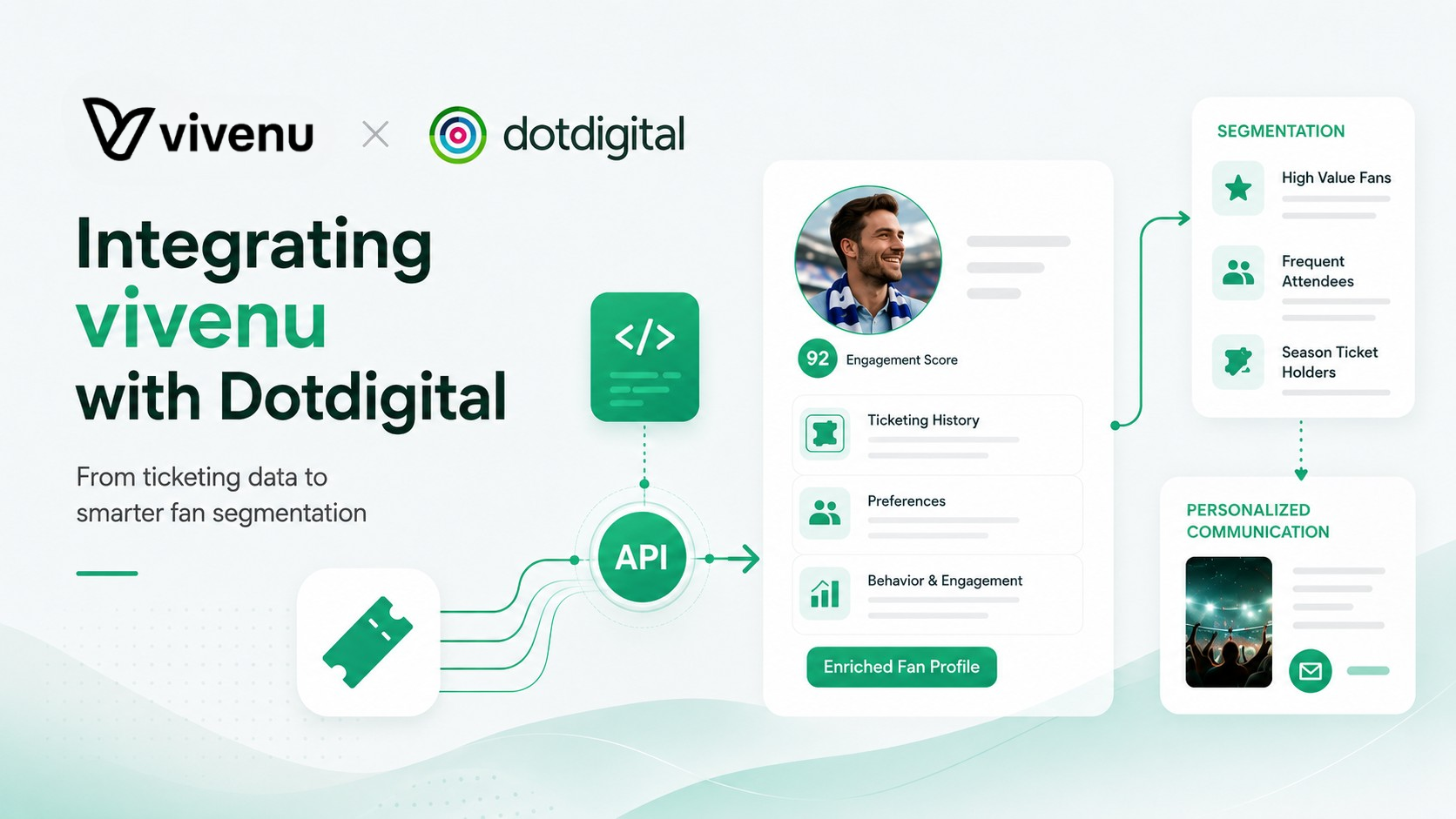
Raumdeuter’s AI analyzes this qualitative feedback and identifies two important signals: 1) a strong personal affinity for retro products 2) a household context with interest in neon items for children. These insights are automatically added to the fan’s existing CRM profile. Instead of seeing him only as a generic merchandise buyer based on past transactions, the club now understands what he emotionally connects with and what is relevant in his personal situation.
This enriched profile can be activated immediately: the fan receives personalized communication around retro jersey launches while also being shown relevant offers for neon shirts in children’s sizes. At scale, this qualitative enrichment enables highly precise segmentation, more relevant communication, higher conversion and basket value, and strengthens the club’s commercial proposition toward partners through deeper audience insights and more targeted activation.
This interview touches a nerve for me.
For years, football clubs have invested heavily in data infrastructure. Ticketing systems, e-commerce, CRM, apps, analytics dashboards. And yet, despite all that data, clubs still struggle to answer some of the most important questions:
Why do fans behave the way they do?
What do they actually care about?
And what’s driving the emotion behind their decisions?
Max’s concept of a “digital ear” captures the gap perfectly.
Most clubs are excellent at collecting what fans do. They are far less capable of understanding why they do it. Transactional data shows outcomes, not motivations. Clicks, purchases, and attendance patterns are effects not causes.
What resonated strongly with me is the idea that clubs systematically underutilise one of their most valuable assets: fans’ willingness to participate. Fans want to share opinions, frustrations, and ideas. When that input isn’t captured, structured, and acted upon, two things happen:
Both are costly.
The second layer Max describes — using AI to cluster, summarise, and surface patterns in thousands of fan messages — is where this becomes operationally interesting. Listening is easy to promise and hard to scale. Without structure, feedback quickly turns into noise, or worse, into something decision-makers actively avoid.
This is where I see a very natural extension of modern CRM thinking.
CRM should not just be a record of past transactions. It should be a living understanding of the fan. Qualitative insight is the missing layer. Not as replacement for quantitative data, but as enrichment.
The merchandise example in the interview illustrates this beautifully. A single written response reveals emotional preference, generational context, and household dynamics. Things no transaction log can ever show. Once that context flows into CRM, segmentation stops being abstract. Personalisation becomes relevant. Monetisation becomes respectful instead of extractive.
From my perspective, this is a strategic opportunity.
Clubs that learn to systematically listen will:
Most importantly, this approach reframes fan inclusion. It’s not a “nice to have” or a symbolic gesture but a way to build better (commercial) systems. Systems that serve fans more thoughtfully and help clubs make better decisions under uncertainty.
That’s where I believe the future of fan-centric CRM and marketing automation is heading.