






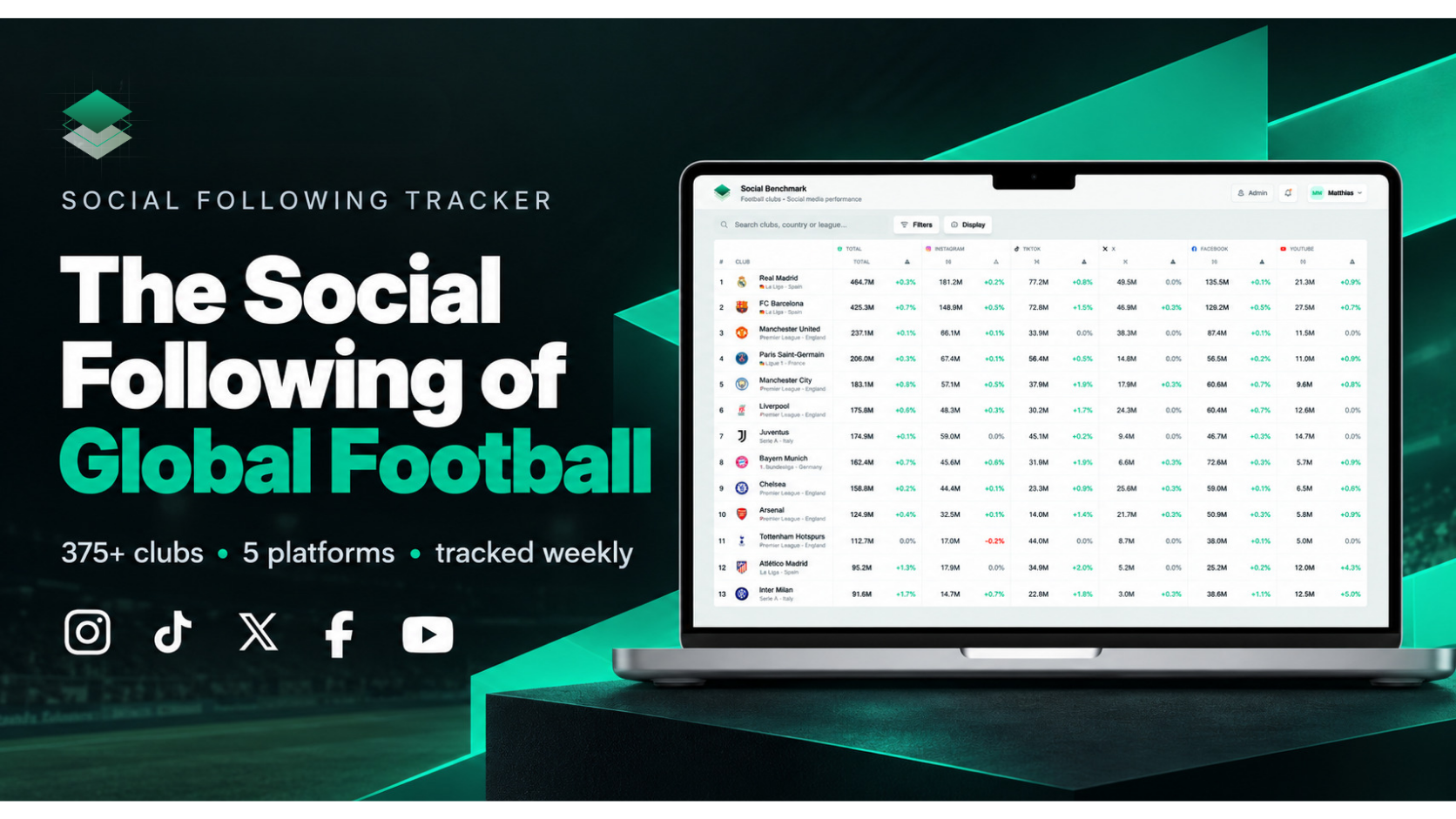
The Most Followed Football Clubs on Social Media
Reading time:
7 min


With decades of experience across sports, music, and live entertainment, Martin Haigh has helped shape ticketing strategies on three continents, from launching Ticketmaster in Asia to leading global SaaS sales for B2C and B2B ticketing companies, stadiums and promoters.
Now at menta tech, he’s focused on solving one of football’s messiest challenges: secondary ticketing. Not just cleaning it up but turning it into a strategic asset.
In this interview, Martin shares:

Loss of control shows up in several ways.
Many clubs reward season-long loyalty and attendance with access to premium fixtures (cup finals, Champions League). Unofficial resellers strip these “golden” matches out of season tickets and bundles, weakening the economics of multi-game products. With no official resale clubs lose identity continuity; if they can’t attribute attendance, they can’t award points or recognise buyer intent.
Families, young supporters and local fans are priced out of big games, putting future income at risk. Clubs also lose control over the price fans pay to watch their product, eroding a carefully structured value-for-money proposition.
Operationally, more away fans appear in home areas, compromising family and accessible zones and weakening segregation controls. Fake or duplicate tickets clog turnstiles and overwhelm customer service with unhappy fans.
Official resale is definitely good for the industry, whether run by the club or an endorsed, integrated partner significantly mitigates the harms above. But football is uniquely complex once season tickets and tiered memberships enter the mix.
Most “official” marketplaces behave like passive listing sites: they publish tickets and wait for buyers to arrive, browse, and purchase if something happens to fit. That model struggles with season-ticket use, member priorities, and uneven demand.
menta takes an active approach. We equip buyers and sellers with tools that increase the likelihood of a match, timely notifications, prompts and alerts that nudge listings and demand together. As a result, our sell-through rate (tickets sold vs. tickets listed) is exceptionally high and is improving all the time as we are continually investing into new features and functions.
Sponsors want direct, measurable conversations with the audiences they fund. The ticket is the universal credential, everyone has one, whether it’s paid, won, comped, or issued as hospitality to a vendor, client or staff member.With digital ticketing, you can target segments with bespoke activations at the two highest-attention moments: the thank-you/confirmation page after checkout, and the confirmation email or SMS, both with near 100% view rates.
At menta, as a resale SaaS provider, a sponsor can badge the official resale marketplace and take credit for reducing scalping, keeping prices fair, and guaranteeing entry - attractive no?
Too many clubs treat resale like a side project. Something to bolt onto a bloated system instead of a core part of the fan journey.
Martin's lens flips that. What stood out to me most wasn’t just the product-side insights, but the strategic framing: when clubs lose visibility into who’s actually in the stadium, they lose much more than revenue. They lose loyalty. They lose attribution. They lose growth levers.
And they lose data integrity. When scalpers dominate high-demand matches, clubs can't tie purchases to real fans. CRM profiles deteriorate. Engagement metrics get distorted. Segmenting, scoring, and targeting fans becomes guesswork and clubs end up flying blind.
menta’s model isn’t just about stopping scalpers butabout recapturing fan intent and enabling new layers of operational, commercial, and experiential value. I think we’ll see more clubs rethink resale, not as a ticketing feature, but as a strategic fan platform.